

Imagine stepping into a grand music hall where three orchestras are rehearsing in adjacent rooms. Each ensemble claims its performance is the most harmonious. Yet standing outside the rooms, you hear only blended echoes. Determining whether these orchestras truly differ requires a conductor’s ear one that compares not individual notes but the overall energy, pitch, and variation. This is the role of ANOVA (Analysis of Variance) and the F-statistic: tools that listen for meaningful differences across multiple groups. Mastering this statistical “ear” is a skill often cultivated in a Data Analyst Course in Delhi, where analysts learn to judge patterns not just by sight but by statistical sound.
Why ANOVA Exists: When Two Groups Aren’t Enough
The real world rarely presents problems involving just two categories. Businesses want to compare marketing channels, hospitals compare three treatment plans, educators measure performance across different teaching methods, and manufacturers evaluate quality across multiple production lines. Comparing groups pairwise leads to confusion, inflated error rates, and contradictory results.
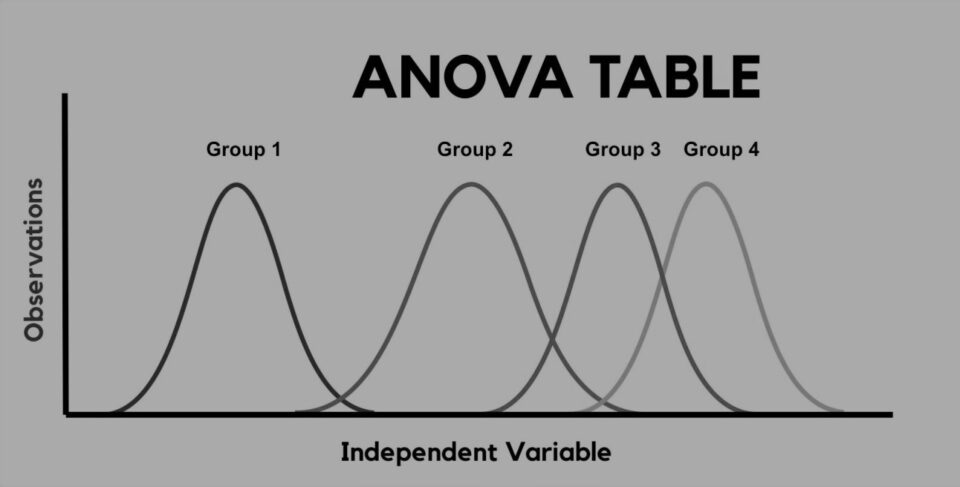
ANOVA offers a structured alternative. Instead of running multiple tests, it examines whether the variation between group means is significantly greater than the variation within groups. If the between-group variability stands out, the groups likely differ in a meaningful way.
This mindset asking whether differences rise above background noise is a foundational principle reinforced in data analytics training in Delhi, where learners are trained to avoid misleading conclusions from multiple comparisons.
The F-Statistic: A Spotlight on Variability
The F-statistic acts like a powerful spotlight illuminating whether differences among groups are large enough to matter. It does this by forming a ratio:
- Numerator (Between-Group Variation): How far the group means spread out from the overall mean.
- Denominator (Within-Group Variation): How much individual observations vary inside each group.
Imagine three orchestras. If each orchestra produces a very distinct harmonical signature, but within each orchestra the performers remain consistent, the numerator grows. The denominator stays small. The resulting F-statistic becomes large signalling the orchestras are genuinely different.
Conversely, if musicians within each orchestra vary widely while the orchestra averages look similar, the F-statistic remains small suggesting the differences might just be noise.
Learning how this ratio captures musical (or statistical) contrast is one reason the F-test features prominently in a Data Analyst Course in Delhi, enabling learners to interpret model outputs confidently.
Bringing ANOVA to Life: Stories from Real-World Decision-Making
Statistical testing becomes truly valuable when it drives action. Consider these scenarios:
Retail Pricing
A retailer tests three discount strategies across regions. ANOVA confirms significant differences, and post-hoc tests reveal which strategy boosts revenue the most. The team avoids blind experimentation and makes data-backed decisions.
Healthcare Interventions
A hospital evaluates recovery times for three treatment methods. ANOVA uncovers that one approach consistently outperforms others guiding policy changes that improve patient outcomes.
Manufacturing Quality Control
An automotive plant compares defect rates across different shifts. ANOVA reveals that one shift shows significantly higher variance, prompting targeted training and process review.
These examples illustrate not just statistical technique but organisational intelligence skills frequently honed during data analytics training in delhi, where learners explore business-centric applications of statistical frameworks.
Interpreting Results: F-Values, P-Values, and the Story They Tell
ANOVA and the F-statistic provide numbers, but interpretation transforms those numbers into insights.
A High F-Value
Indicates group means differ meaningfully relative to the noise. However, the F-value alone cannot confirm significance it must be compared to the critical value or evaluated via the p-value.
A Low P-Value
Indicates strong evidence against the hypothesis that group means are equal. Analysts often set a significance threshold (e.g., 0.05) to determine whether differences warrant action.
Post-Hoc Testing
ANOVA tells you whether there is a difference but not where. Tools like Tukey’s HSD or Bonferroni-adjusted comparisons reveal which specific groups differ.
A marketing team used this approach to refine their regional strategy. ANOVA highlighted that campaign performance varied significantly. Post-hoc tests pinpointed exactly which regions responded best helping the team allocate budget more effectively.
This structured interpretation is a core element of statistical modules in a Data Analyst Course in Delhi, where students learn both how to compute and how to communicate results.
When ANOVA Works and When It Doesn’t
ANOVA is powerful but not universal. It operates under assumptions:
- Normal distribution of residuals
- Equal variances across groups
- Independent observations
Violating these assumptions can skew conclusions. For instance, heteroscedasticity (unequal variances) makes the F-statistic unreliable. Non-normality may require transformations or non-parametric alternatives like Kruskal–Wallis.
Understanding when to trust ANOVA and when to choose a different approach is a key responsibility of data professionals, one nurtured through practical scenarios in data analytics training in delhi, where every statistical test is evaluated in context.
Conclusion: ANOVA as the Conductor of Statistical Clarity
ANOVA and the F-statistic help analysts make sense of multi-group variation with elegance and precision. Rather than drowning in pairwise comparisons, businesses gain a clear, orchestrated understanding of whether groups differ in meaningful ways. From pricing optimisation to clinical effectiveness, ANOVA transforms scattered observations into structured insights.
With the right interpretation, these techniques turn data into narratives and variability into decisions. And through structured learning such as a Data Analyst Course in Delhi or advanced data analytics training in delhi, aspiring professionals gain both the analytical intuition and practical confidence to wield ANOVA as a powerful decision-making tool.
Business Name: ExcelR – Data Science, Data Analyst, Business Analyst Course Training in Delhi
Address: M 130-131, Inside ABL Work Space,Second Floor, Connaught Cir, Connaught Place, New Delhi, Delhi 110001
Phone: 09632156744
Business Email: enquiry@excelr.com
