

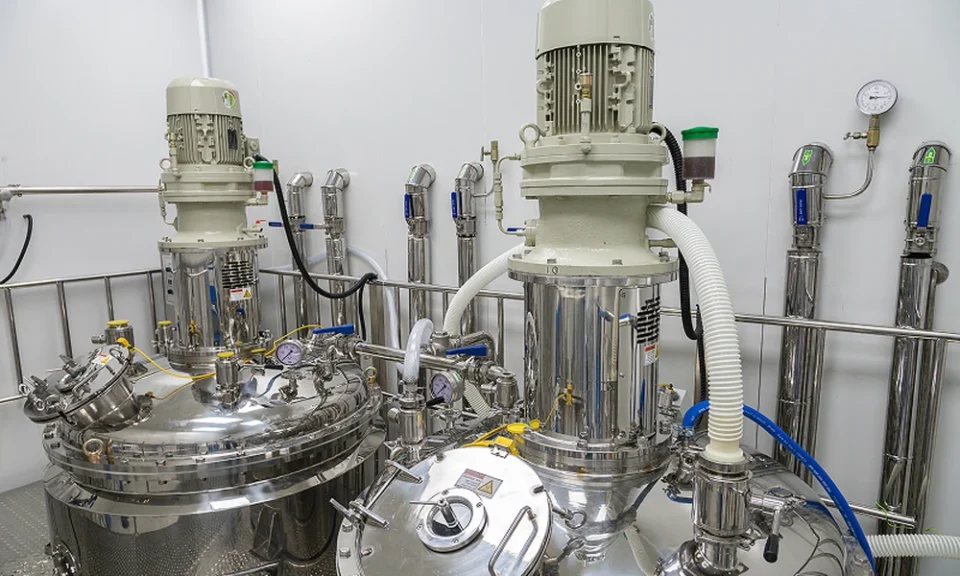
Key Highlights
- Pressure tanks provide a steady and pulse-free supply of material to the production line.
- The use of pressurised containers eliminates the risk of air entrapment and material contamination.
- High-quality dispense valves work in tandem with tanks to regulate exact volume output.
- Consistent pressure levels reduce mechanical wear on dispensing components over time.
Introduction
In the world of industrial manufacturing, the ability to apply fluids, adhesives, and sealants with absolute consistency is a fundamental requirement. Whether a facility produces delicate electronic components or heavy automotive parts, any variation in material delivery can lead to significant quality control issues. This is where a robust pressure tank becomes an indispensable asset for the production floor. By acting as a centralised reservoir that maintains a constant force, these tanks ensure the fluid remains ready for application at any moment. When paired with precision-engineered dispense valves, the result is a seamless workflow that minimises waste and maximises throughput. Understanding the relationship between these two components is essential for any engineer looking to optimise their fluid handling systems.
Maintaining Steady Fluid Pressure
The primary function of a pressure tank is to provide a constant and unwavering source of fluid to the dispensing system. Unlike traditional pump systems that can occasionally suffer from pulsations or wavy flow rates, a pressurised tank uses air or nitrogen to push the material out at a fixed rate. This steady pressure is vital when the application requires a continuous bead of adhesive or a perfectly measured dot of lubricant. If the pressure fluctuates even slightly, the volume of material delivered to the workpiece will vary, potentially compromising the integrity of the finished product.
Furthermore, a pressure tank enables greater control over the flow rate by allowing operators to fine-tune the internal air pressure. This adjustability ensures that the system can accommodate materials of varying viscosities, from thin solvents to thick pastes. By maintaining a stable environment inside the tank, the material reaches the application point in a predictable state. This reliability forms the foundation of a high-quality dispensing process, enabling manufacturers to meet strict tolerances without the need for constant manual intervention.
Eliminating Air Bubbles and Contaminants
Air entrapment is one of the most common enemies of precision dispensing. Small bubbles within the fluid can cause spitting at the nozzle or create gaps in a sealed joint, leading to immediate product failure. A pressure tank helps solve this issue by keeping the material under constant compression, helping keep air from mixing into the fluid. Many advanced tanks also feature degassing capabilities or vacuum options to remove air before the dispensing process even begins. This ensures that only pure, bubble-free material enters the delivery lines.
Beyond preventing air bubbles, these tanks also protect the material from environmental contaminants. Because the system is completely sealed from the ambient air, dust, moisture, and debris cannot enter the reservoir. This is particularly important for moisture-sensitive materials like certain urethanes or cyanoacrylates that can harden or degrade when exposed to humidity. By maintaining the purity of the material from the tank to the workpiece, manufacturers can extend the shelf life of their fluids and ensure that every drop used is of the highest quality.
Improving Precision with Dispense Valves
While the tank provides the force, the dispense valves act as the gatekeepers of the system. These valves are responsible for starting and stopping the flow of material with millisecond accuracy. For a dispensing valve to function at its peak performance, it requires a steady supply of material at a consistent pressure. If the incoming pressure from the tank is unstable, the valve cannot accurately regulate the volume of the output, regardless of how high its quality may be. Therefore, the synergy between the pressure source and the valve is the most critical factor in achieving precision.
Modern dispense valves are designed to handle high-speed cycles and intricate patterns. When they receive a reliable feed from a pressure tank, they can operate with a high degree of repeatability. This means that the first part on the assembly line receives the exact same amount of material as the thousandth part. This level of repeatability is what allows automated systems to run for hours without supervision, confident that the dispense valves are performing their job exactly as programmed.
Reducing Downtime and Material Waste
Efficiency in manufacturing is often measured by the reduction of waste and the maximisation of uptime. A well-integrated pressure tank contributes to both of these goals. Because these tanks can hold large volumes of material, they reduce the frequency of refills compared to smaller cartridges or syringes. This translates to fewer stoppages on the production line and less time spent on maintenance. Additionally, the ability to use the entirety of the material within a large tank reduces the cumulative waste that occurs when discarding multiple smaller containers.
The consistent output facilitated by the tank and dispense valves also significantly lowers the rate of rejected parts. When material is applied the first time correctly, there is no need for expensive rework or the scrapping of valuable components. Over a long production run, the savings in material costs and labour can be substantial. By investing in a reliable pressure management system, companies protect their bottom line while maintaining a reputation for delivering flawless products to their customers.
Conclusion
The integration of a high-performance pressure tank is a strategic move for any manufacturer aiming to improve their fluid delivery systems. By ensuring a steady flow, eliminating air entrapment, and providing a reliable feed for dispense valves, these tanks solve the most common challenges in material application. The resulting consistency not only improves product quality but also drives operational efficiency by reducing waste and downtime. As manufacturing standards continue to rise, the role of precise pressure management will only become more vital in the pursuit of industrial excellence.
To learn more about how our fluid handling solutions can improve your production line, contact Unicontrols today.